How Automatic Brick and Block Making Machines Are Transforming India’s Construction Industry
India’s construction and infrastructure industry is growing rapidly, increasing the demand for durable, high-quality building materials. As residential projects, commercial developments, and infrastructure projects expand, manufacturers need efficient solutions to meet production requirements. A modern brick and block making machine helps businesses improve manufacturing efficiency, maintain product consistency, and increase production capacity.
For building material manufacturers, investing in advanced machinery is an important step toward meeting market demand. Automated production systems, hydraulic technology, and efficient material handling can help businesses streamline operations and build a competitive position in the construction industry.
Improving Production Efficiency with Advanced Machinery
A modern concrete block making machine combines different manufacturing processes to support consistent and efficient production. Compared with conventional manual methods, automated machinery can reduce repetitive work and improve control over production parameters.
1. Accurate Material Mixing and Handling
The quality of bricks and concrete blocks depends on the selection, proportion, and mixing of raw materials. Materials such as fly ash, sand, cement, lime, and gypsum may be used depending on the product formulation.
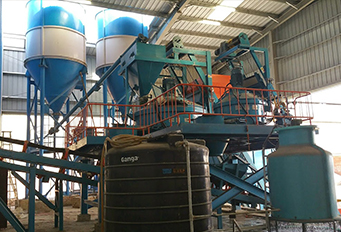
Integrated mixing systems help maintain consistent material proportions and improve batch uniformity. This can support the production of reliable building materials while reducing variations caused by manual handling.
2. Better Material Utilization and Reduced Waste
Efficient production planning helps manufacturers minimize raw material wastage and control operating costs. Modern brick manufacturing plants can improve material handling, monitor production quality, and identify defective products.
Where the material formulation and production process permit, suitable rejected material may be reused. However, recycling procedures must follow product specifications and quality requirements to ensure that the finished bricks and blocks maintain the required performance.
3. Hydraulic Technology for Consistent Product Quality
Hydraulic systems and controlled vibration are important features of many modern brick and block manufacturing machines. These technologies help compact the concrete mixture into the required shape and density.
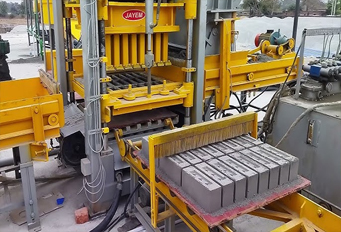
A well-designed hydraulic brick making machine can support consistent product dimensions and manufacturing quality. The actual pressure, vibration settings, and output depend on the machine model and production configuration.
Manufacturers should select machinery based on the required block type, compressive strength specifications, production capacity, and applicable quality standards.
Reducing Labour Dependency Through Automation
Managing labour, production schedules, and manufacturing costs can be challenging for building material manufacturers. A fully automatic brick making machine can help streamline repetitive operations and reduce dependence on manual handling.
Automated production systems may include programmable logic controllers (PLCs), control panels, material feeding systems, and automated handling equipment. These features help operators monitor production processes and maintain consistent operating conditions.
Automation can offer several benefits:
- Improved production planning and workflow management.
- Reduced repetitive manual operations.
- More consistent manufacturing processes.
- Better monitoring of machine performance.
- Potential savings in labour and operating costs.
The overall benefits depend on the level of automation, machine capacity, operator training, maintenance practices, and plant layout.
Choosing the Right Brick Manufacturing Machine in India
When investing in a brick manufacturing machine, businesses should evaluate more than the initial purchase price. The right equipment should match their production goals, available infrastructure, and target market.
Important factors include:
- Production capacity: Determine the required daily output based on expected demand.
- Machine automation: Compare manual, semi-automatic, and fully automatic systems.
- Product versatility: Check whether the machine can manufacture the required bricks, concrete blocks, or paver blocks using suitable moulds.
- Operating costs: Consider electricity, labour, maintenance, moulds, and raw materials.
- Technical support: Evaluate installation assistance, operator training, spare parts, and maintenance services.
- Total investment: Compare the machine price with installation expenses, infrastructure requirements, and expected operating costs.
A detailed evaluation helps manufacturers choose machinery that aligns with their business requirements and long-term plans.
Building a Competitive Advantage in the Construction Market
Construction companies and infrastructure developers require building materials that meet their project specifications. Manufacturers who maintain consistent quality, reliable delivery schedules, and competitive pricing can strengthen their business relationships.
Automated brick and block production can help businesses manage larger orders and improve manufacturing consistency. Uniform product dimensions may also make installation easier for construction teams when the products meet the required specifications.
For manufacturers planning to supply large residential, commercial, or infrastructure projects, investing in appropriate production technology can support business growth and improve operational planning.
Fly Ash Bricks and Concrete Blocks for Sustainable Construction
Fly ash bricks and concrete blocks are widely used in different types of construction, depending on project requirements and local building practices.
A fly ash brick making machine supports the manufacturing of bricks using suitable raw materials that may include fly ash. Using industrial by-products in building materials can support resource efficiency when the materials are properly processed and the finished products meet applicable standards.
Businesses should consider raw material availability, product quality, curing requirements, and local market demand before entering this manufacturing segment.
To explore machinery and product options, visit Jayem Manufacturing Company’s brick and block machinery page.
Learn about Indian quality standards for bricks and construction materials through the Bureau of Indian Standards (BIS).